

Searching for Ice in the Arctic
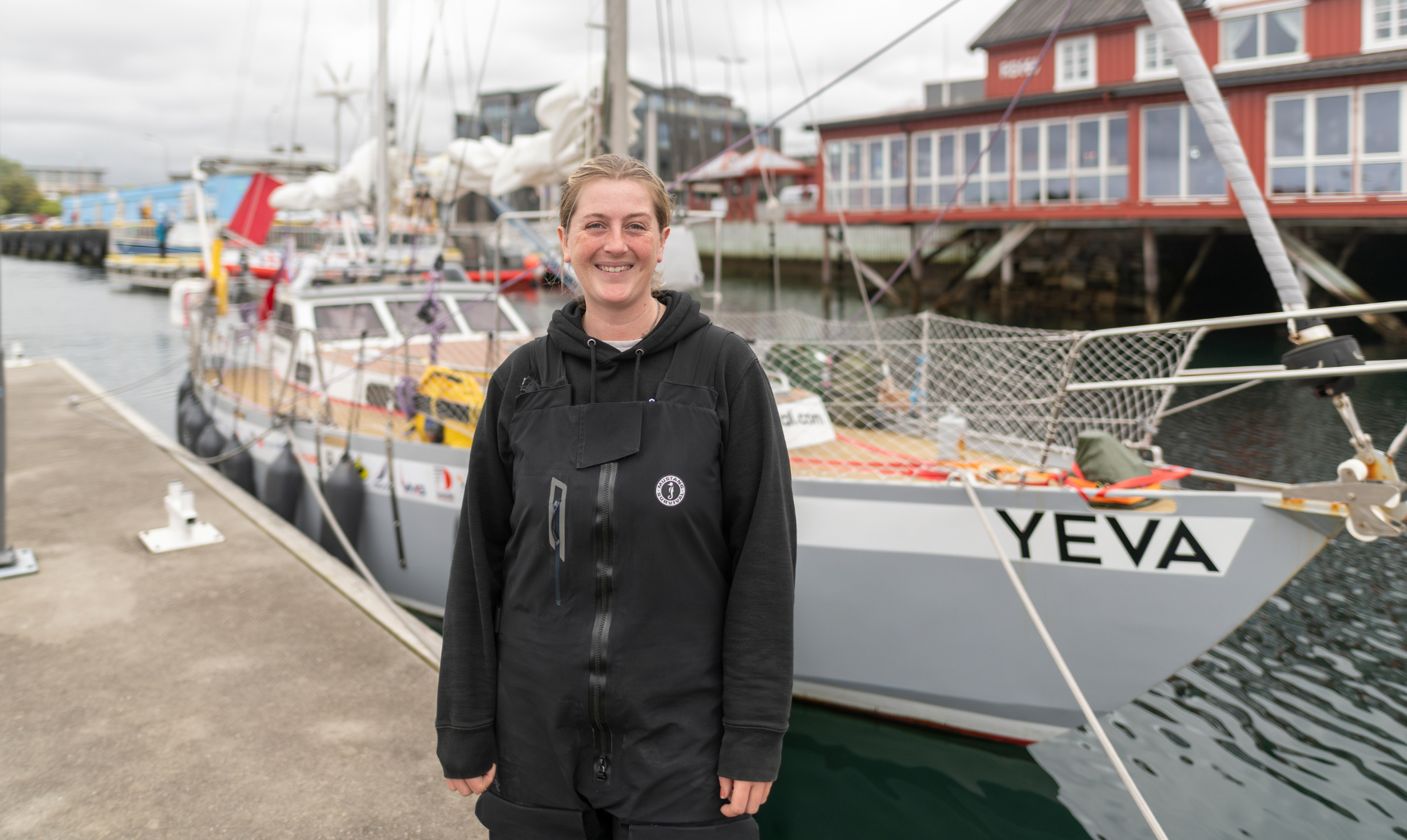
In June 2025, 28 year old Ella Hibbert set off on a record-breaking voyage. Her expedition would make her the first sailor to complete a solo circumnavigation of the Arctic, a journey of 10,000 miles.
But, as with all good adventures, things don’t always go according to plan. After a rough start in the North Sea, a small fire on board, and running aground in a storm off the coast of Canada’s North-West territories, Ella is now back on dry land.
We took advantage of Ella’s unexpected down-time to talk through the first leg of her Arctic expedition, and her ongoing mission to showcase the impact of climate change in the region.
You were inspired to undertake this expedition partly to become the first British woman to do it solo, and partly to demonstrate the impacts of climate change. Which was the stronger motivator?
The record for me is neither here nor there. It’s cool to be able to say you're the first British woman to do something, but the whole campaign has always been about raising awareness of the conditions in the Arctic. If I complete the full circumnavigation next year, it'll be the first ever single handed circumnavigation of the Arctic Circle. That's a record I'll always be uncomfortable with, in the sense that it just shouldn't be possible to sail through those waters. It'll be almost upsetting to have done it.

An expedition like yours takes years to come together. Was there anything about the expedition that was different from how you imagined it?
By my reckoning, I was the only boat sailing East to West through the Northwest Passage that decided to do the Victoria Strait (a southern route), all of the other boats opted for an ice-free option. To me, the fact that there’s a window where an ice-free route exists is massively worrying, as was the fact that the Russian coast was open through most of August and into early September.
We only experienced one patch of ice all the way up to Fort Ross, in the heart of the Northwest Passage – in fact, my first proper sign of pack ice only came about sixty days after entering the Arctic Circle. To give that some context, consider that the Victoria Strait was only transited for the first time in the 1960s by icebreaker. Coming through that section was the closest I have ever been to where we lost Franklin’s HMS Erebus and Terror in 1848. The ice was so sparse when I was there, it was actually quite upsetting. Now, the organisers of the Vendée Globe are launching a race called the Vendée Arctique, where competitors will cross the Arctic Circle and race around Iceland. It makes you wonder how long is it going to be before they open the Arctic fully. The Arctic Circle is not a playground.
From my own perspective, just by filming and running the social media for my expedition I found it hard to tread the line between wanting people to see how beautiful the Arctic Circle is and communicate how we should protect it and be invested in it without making people feel that they need to come and see it for themselves.
Was there anything else about the expedition that was different from what you imagined?
Right before I crossed into the Arctic Circle, in eastern Iceland, I noticed an electrical fault which almost resulted in a fire in the boat’s cabin. Fire is up there with a sailor's biggest fears when you're alone at sea. A wave had got inside the cabin and salt water had obviously got into the electrics. Luckily the engine was off and I was inside the cabin so I could hear a USB socket sparking behind the wall. With absolutely no sense of self preservation, I grabbed it, ripped it out of the wall, followed by all the fuses. While it was fine in the end, I made the decision to stop in Grímsey (40km north of Iceland) to check everything and make sure it was safe.
That decision immediately meant the circumnavigation would no longer be a ‘non-stop’ attempt, but it allowed me to get involved with the local communities and go out and chat to people. In hindsight, that gave me a better experience as I got a more well-rounded understanding of what life’s like in each place. Every time you landed in a community, there'd be someone offering you a drive or a walk around, or kids wanting to chat to you about where you were from. That was a positive difference that I wasn't expecting.
What was the hardest day of the expedition?
I think running aground was probably my lowest moment. About 80 days after entering the Arctic Circle, we reached Tuktoyaktuk where we were faced with the worst storm the area had known in over 40 years. I was knackered after sheltering from the storm for two days, and left port over-tired from that whole experience.
In doing so, I found that the storm had extended some areas of what the charts suggested were 3m to 4m shallows, which meant I bumped off the ground completely unexpectedly as I tried to move off. When I tried to turn around and go back the way I’d just come, I ended up turning the boat straight onto more ground. I spoke to the Canadian Coast Guard and they asked that I go ashore with them because they couldn't assist in the dark in the conditions.
Leaving Yeva in the dark was just agony, and the weather was so bad the next day that they didn't want to take me back out to the boat again. So I ended up sitting on land for two days.
Was the sailing the most challenging aspect of travelling through the Northwest Passage?
Navigation wise, it was challenging in the sense that you’re sailing over areas that quite literally aren’t charted (or if they are, there’s no accuracy to the chartings). Obviously running aground was hard but when you’ve got the skills and the training to cope and an action plan in place, we came out of that scenario no worse off. It actually means those situations were easier to handle in a way.
I definitely found the mental game of it all a lot harder than the actual sailing of the vessel because the whole thing was so different to what I’d expected it to be. And when expectations and reality don’t align, that can be a bit of a mental struggle. The weather wrought havoc on me mentally, as well as the fact I’d prepared to be out there completely alone. Every time I left a bay where I’d met other sailors and other people and then had to head out on my own again, I found it harder and harder each time.
How did you stay motivated?
Literally the whole of the inside of the boat is plastered in photos, but just speaking to family was a great motivator. Iridium was my communications partner for the trip so we had two-way comms and 45 minutes of satellite phone calls a month through them. It meant that, if there was a day when I was feeling really low, I could punch in my best friend's phone number and get she or Mum and Dad on the phone to cheer me up. A few minutes here or there on those really low days was really helpful. And Jackie actually made me an MP3 player with loads of songs that she'd sung and poems she'd recited and just feel good things or writing prompts. Having that sort of connection to your loved ones makes all the difference.

How did you manage the sleep cycles of only 20 minutes?
It’s something I prepared for last summer when I did my training sails up to Longyearbyen. You have to figure out what time frame works best for you - for some people it is 15 minutes, for others half an hour. I found 20 minutes ideal because it stops me from getting into REM sleep, but it’s long enough to switch off. Even in the 20 minutes, you're not fast asleep, you keep one eye and one ear open for changes all the time. After a couple of days, I'd instinctively open my eyes after about 18 - 19 minutes. I've actually found it a lot harder getting out of it; I’ve really struggled to sleep through the night since I've been back - it took me five to six weeks. Once you’re in survival mode for so long, it takes a while for your nervous system to regulate back knowing that you’re safe.
What were some of the highlights?
The wildlife! Our first polar bear sighting on the beach in front of us was amazing, and we saw narwhals too, who are usually so boat shy. We were lucky; this Alaskan dude was flying his plane around while we were at anchor in Fort Ross Bay, and radioed to tell us the narwhals were in the next bay over. We were able to go round in the dinghies and watch them from the beach, and that was just incredible.
I'd also say the Northern Lights - I saw them last year up in Norway but they just never get old. In the time I was in the Arctic Circle, I experienced being in 24/7 daylight, as well as periods where I could watch the sun set, followed by darkness lit up by the Northern Lights. It was like the full spectrum of the Arctic.


Circumstances obviously forced your hand before you turned from Alaska up into the Northeast Passage, meaning you had to come home and split the expedition in two. Did you ever consider that a risk?
We were aware it could be a possibility. By the time I ran aground and was getting across Northern Alaska, I was already running late for my permit for Russian waters. I asked about extending it, but the authorities were concerned that young ice had already started to form in the Kara and Laptev Seas. The plan was always to try and do the sail in one season, but so much went wrong, I was advised to try again next year.
Do you feel frustrated or are there benefits in breaking the expedition into two?
It’s a bit of both. I am frustrated as it’s not something that I ever wanted to take this long; I started this whole project when I was 25 and I’m going to be 30 by the time I get back next year. On the other hand, from a mental perspective, it’s been nice to be able to come back and see my family, my dog, and my friends and sort of regroup in that sense. And get some sleep! The first half definitely put me through my paces in the sense that there was a lot of equipment that needed fixing. I’ve learned a lot, so I think that will help make next year more successful.

What do you think is going to be different about the second half? Is there anything you plan to take from what you learned and then apply?
I’d prepped the boat to do the whole thing in one season so in terms of the equipment and the food we’ve got, that all remains the same. I just hope there’s more wind, more sailability in the North. The north-east has fewer inlets and islands, it’s more of a straight line coastal sail, so I think the only traffic I’ll see north of Russia will either be fishing boats or container ships. I think I'll need to reset to the mentality I was trying to leave England with the first time around when I thought I’d be doing it all non-stop and in one go.
Was there anything that you took on Yeva that you didn't use?
Probably too many bras! There was a lot of the emergency stuff that I didn't use, like the medical kits, thank God. I wouldn't say there was anything that was a waste of space, though.
Let’s talk about food! What snacks did you take with you?
I took your curry peanuts! They were good because they’re so flavoursome. I also had biscuits and, wherever I could get my hands on them (and it was clear I wasn't taking limited fresh produce away from the community), apples. In the Northwest Passage, an apple can cost about $12 in a local supermarket!
There was one moment where I was in the same bay as the National Geographic Resolution cruise ship, and got invited to give a talk to their guests about what I was doing. The captain asked what food I wanted, and all I could think of was salad, apples, fruit! They ended up giving me a massive carton full of fruit that I wasn’t able to finish and so I shared it with the other boats in the passage, and that was great. But yeah, otherwise it was biscuits, crisps and sweets - anything sour. I love Skittles.
Which meal did you crave the most during the expedition?
Bruschetta! I had one for lunch yesterday. Just fresh tomatoes, and focaccia fresh out of the oven. I did actually keep a record of all of my food cravings and sent them to my mum for when I got home.
How important was nutrition during the expedition, and how did you keep on top of it?
I took a lot of supplements and vitamins but, to be honest, that’s about it. I did drop an entire dress size this summer, so I might not have been fuelling myself quite enough, but I'm not one of those people that will eat if I'm not hungry. The more stressed I get and the more hands-on the situation is, the less hungry I am.
After a period of navigation, food was always top of the list before I could even think about rest and catching up on sleep. When I found an anchorage or a harbour, it was only then that I realised that I actually was really quite hungry. It might not be sustainable if I was doing it year in year out, but for three or four months over the summer, it's fine.
And was there anything that you used more than you thought you would?
The cameras. We have this intention of making a documentary about what we're doing, but I thought I wouldn't feel the urge to film everything all the time. In reality, it became almost therapeutic and there genuinely wasn't a moment of a day where I didn't think 'that deserves to be filmed', it was just stunning. So, I think the camera definitely got a lot more use than I thought it would. Other than that, hats. I lived in my hats. I didn't take a hat off the whole time.
Did you learn anything about yourself from this first part of this expedition?
I think I've learned where my limit is, which I probably didn't know before. I can now recognise how to prevent the breakdown: I'm like, right, I haven't eaten in 24 hours, I'm going to need that. I haven't slept in 48 hours, I'm going to need that. I know where my limits lie in that sense. But otherwise this campaign's been in the preparation stage for so long that I don't think there was a lot that surprised me about how I handled it or myself.
Do you think the expedition has changed you?
Yes. In the sense that I now absolutely hate crowded areas and places full of people. I've always been quite a sociable person, but I couldn't do a dinner party one night and a night with someone else the following night. I found getting on the tube quite suffocating, almost to a point where I had to get out of there. I’m absolutely terrified of driving in the dark, I’m a lot more of a nervous driver than I've ever been, but maybe that's not surprising when you spend half the year doing four knots in the open ocean and then suddenly you're driving at 70mph in the dark.


What’s the plan until May, and what’s next?
I’m giving lots of talks, I’m going to France for Christmas, and then it all kicks off again. There’s the Boat Show in January, a couple of talks in yacht clubs around Lymington and Cowes, and in February I’m going to a two day event up North. But I already feel that if tomorrow was the day to fly back, I'd be ready to go.
Beyond that, I've been approached about writing a book. And when I get Yeva back to England we’ll auction her, donating all the money to Polar Bears International and Ocean Nation Conservancy. It's going to be so sad, but I'm also really excited for it because it'll be the whole project coming full circle, giving back to everyone that helped make it happen. She will, I hope, go to a sailor that will sail around the world or take her somewhere cold.
I’m also thinking about heading up to the communities I’ve visited and helping teach navigation and use of the equipment using their rescue services. It’s going to be needed because, realistically, the busier it gets up there, the more things are going to go wrong.
One last question to finish. Did the trip make you feel hopeless or hopeful about climate change?
There were definitely moments of sadness, concern and worry but I don't think we're at hopelessness yet. I think losing hope is one of the most dangerous things at this point. We've got to have some sort of faith that we can do better. But yes, when you get to Alaska and find out that Trump has gone and rescinded a nature reserve that Obama put in and has opened it up to oil and gas drilling, you think ‘why am I here, what am I doing?’ But, on the other hand, you end up somewhere like St. Paul Island where every single person in that community is aware of what's happening and talking and educating their children about it. So a bit of both.
Ella will return to the Arctic to complete her record-breaking attempt in Spring 2026, when the ice re-opens. Follow her journey here.

Related stories

